
Cape Canaveral and Cocoa Beach sit on a strip of sand between the Atlantic and the Banana River. Every onshore breeze carries salt, and salt is what decides how long a metal roof lasts out here. The same panel that holds up for decades in Viera or West Melbourne can show rust at its cut edges within a few years of a house a block from the beach.
Choosing the metal comes first.
Steel or aluminum
Most metal roofs in Florida are Galvalume steel: steel sheet with an aluminum and zinc coating, usually painted. It’s strong, it costs less than aluminum, and inland it performs well for a very long time. The weak points are anywhere the coating is broken, like cut panel ends, drilled holes and scratches from installation. Near salt water those spots corrode first. Many steel panel manufacturers limit or exclude their warranties within a set distance of salt water, and that distance varies from one manufacturer to the next.
Aluminum doesn’t red-rust. It holds up in salt air where steel struggles, which is why you see it on oceanfront condos along A1A. It costs more, and it dents more easily than steel of the same thickness. For a house on the barrier island, we think aluminum is usually worth the extra money, and the decision should start with the warranty document, not the brochure.
Ask about the warranty distance in writing
Before you sign, ask the contractor which manufacturer’s panels they’re quoting, then read that manufacturer’s coastal exclusion yourself. If your house falls inside the excluded distance, a 40-year paint warranty may cover nothing at your address. A good installer will have checked this before the quote. If they haven’t, that tells you something.
Standing seam or screw-down panels
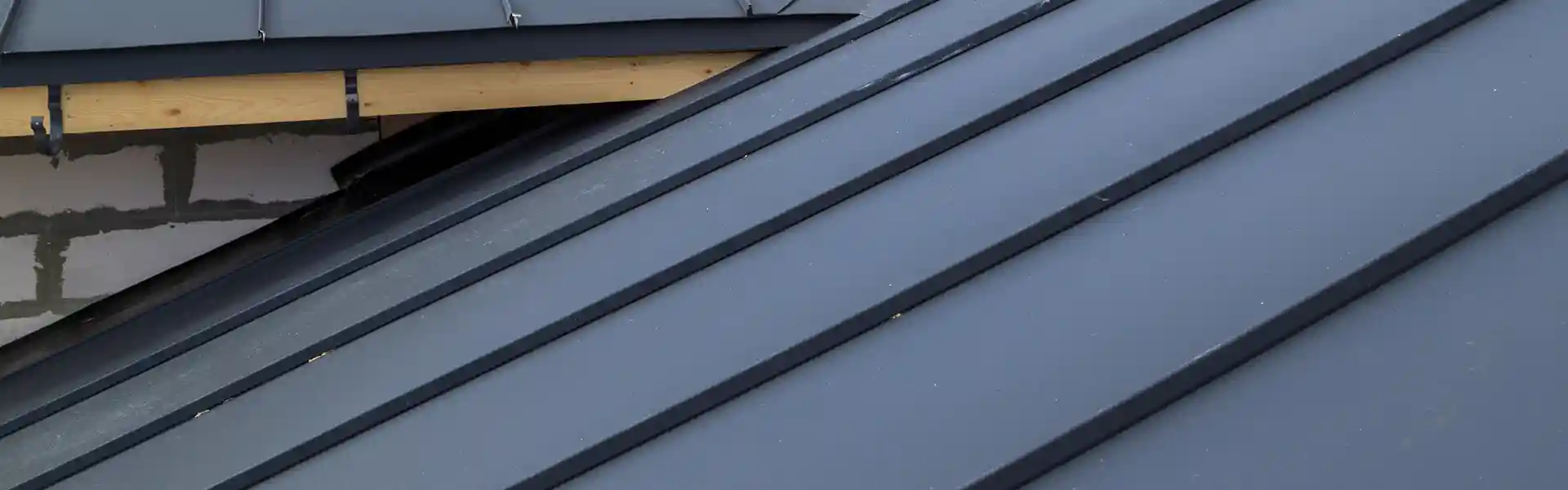
Standing seam panels join along raised seams and attach to the roof with hidden clips. No fastener faces the weather. Exposed-fastener panels, often called screw-down or R-panel, attach with screws driven straight through the face of the panel, each sealed by a rubber washer. Screw-down roofs cost less to install. They also carry thousands of small penetrations whose washers dry out in the sun, and near the ocean every one of those screws is another place for corrosion to start. On a coastal home you plan to keep, standing seam is the better roof.
The details that fail first
- Fasteners and clips. They should be compatible with the panel metal. Mixing metals that react with each other, like aluminum panels with plain steel screws, corrodes the joint.
- Flashing and trim. Use the same metal and finish as the panels, not leftover trim from a different job.
- Cut edges. Panels cut on site should be cut cleanly, with the metal shavings swept off. Shavings left on a painted panel rust and stain the finish within weeks.
- Underlayment. A synthetic, high-temperature underlayment belongs under metal in Florida’s heat.
Permits and product approval
Roofing products sold in Florida need a Florida Product Approval, which shows the panel system was tested for wind uplift. Ask for the approval number on your quote. Your contractor pulls the permit through the City of Cape Canaveral or the City of Cocoa Beach building department, depending on where you live, and the inspector checks the installation against that approval.
Care after it’s installed
Rain rinses most of a metal roof. The parts it doesn’t reach, like the undersides of overhangs and the panels sheltered by a second story, collect salt film. Some manufacturers recommend rinsing those areas with fresh water, so check your warranty for its maintenance terms. Keep gutters clear too. Wet leaves sitting against metal hold moisture and salt against the finish.
We install metal roofing across Brevard, and on the barrier island we start every quote with the panel metal and the warranty distance. For more on roofing near the Port and along Ridgewood Avenue, see our Cape Canaveral roofing page.